- Login
- Sign Up

World Aquatics Water Polo Pool Requirements
Water polo is one of the most demanding aquatic sports from a facility design perspective. Unlike a conventional swimming pool, a water polo venue must meet specific World Aquatics (WA) requirements relating to field dimensions, water depth, goals, field markings, competition equipment and player safety. Whether you are designing a new aquatic centre, renovating an existing facility, or planning to host national and international competitions, understanding these requirements is essential
What are the World Aquatics Requirements for a Water Polo Pool?
A World Aquatics-compliant water polo pool must satisfy requirements covering the field of play dimensions, water depth, goal specifications, competition markings, timing equipment and athlete safety. These standards ensure consistency across all international competitions, from regional championships to the Olympic Games. Compliance with World Aquatics regulations also helps facility owners future-proof their venues and increase their ability to host high-level events.
- International standard established by World Aquatics
- Covers dimensions, equipment and safety requirements
- Used for Olympic and World Championship competitions
- Essential for competition certification and event hosting
What are the Official Dimensions of a Water Polo Field of Play?
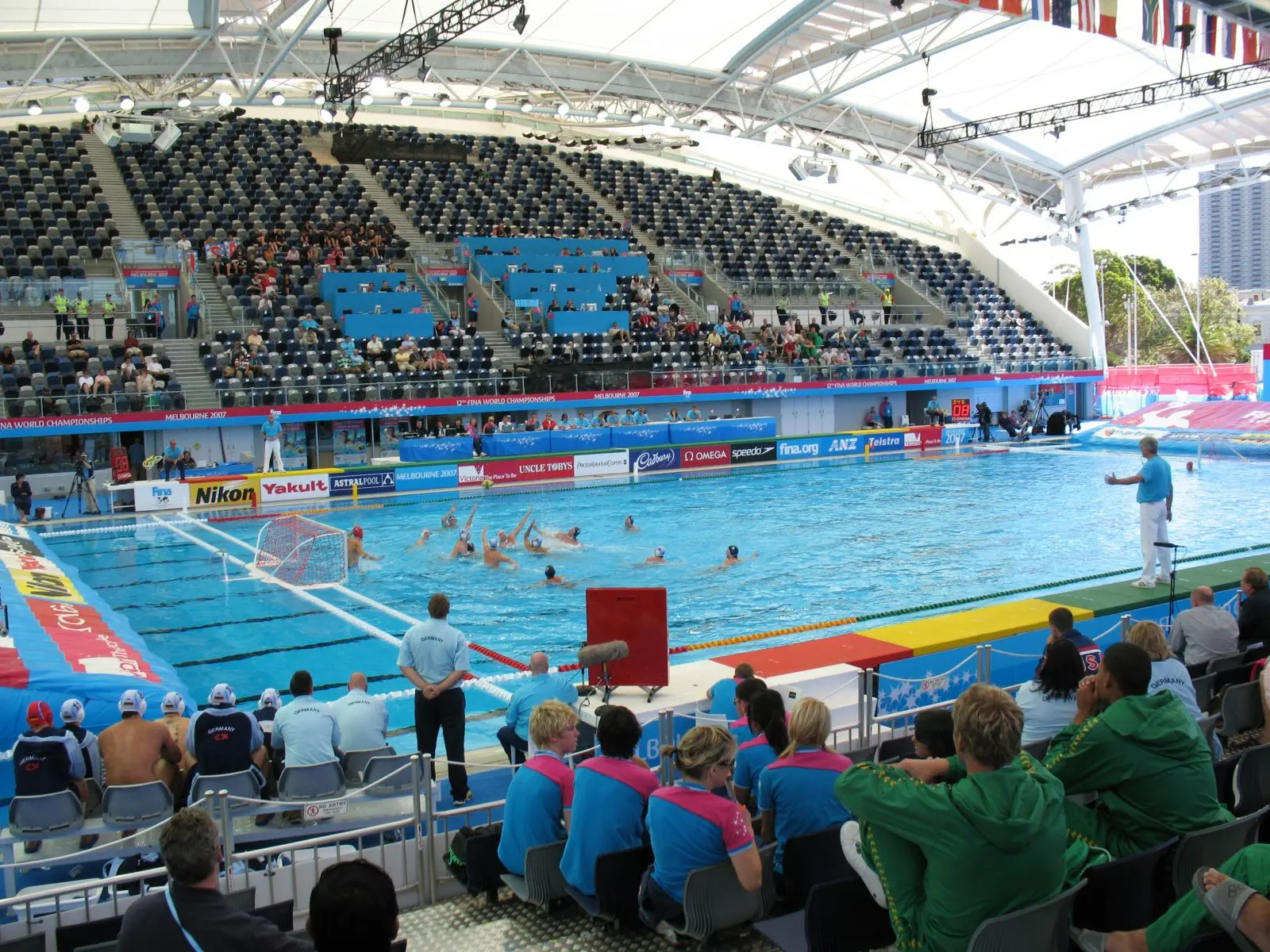
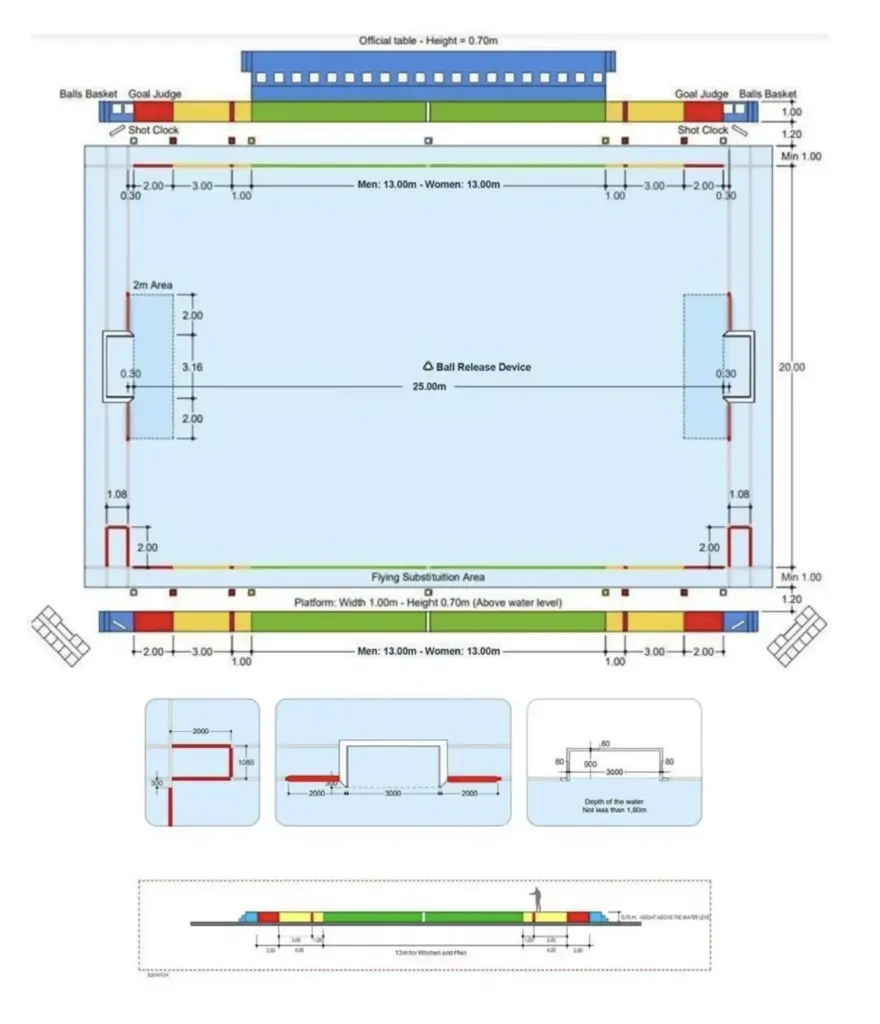
World Aquatics has standardised the dimensions of the field of play for both men’s and women’s competitions. The official playing area measures 25 metres between the goal lines and 20 metres in width. This change simplifies facility planning and creates a consistent competition environment worldwide. The overall field of play is slightly longer than 25 metres due to the required space allocated behind each goal.
- Playing length: 25.00 m
- Playing width: 20.00 m
- Same dimensions for men’s and women’s competitions
- Standardised layout for international events
Why was the Water Polo Field Standardised?
Historically, men’s and women’s competitions were played in different field sizes. World Aquatics introduced a standardised field dimension to simplify competition operations, improve consistency and allow more venues to host international events. The standardisation also assists architects and consultants by providing a single design criterion for future water polo facilities.
- Creates a single international standard
- Simplifies pool design and planning
- Improves consistency across competitions
- Increases venue flexibility
What is the Minimum Water Depth required for Water Polo?
Water depth is a critical aspect of water polo facility design. World Aquatics requires a minimum water depth of 1.8 metres for competition. The purpose is to prevent athletes from gaining an advantage by standing on the pool floor and to ensure the sport remains a true deep-water activity. Many modern water polo venues exceed the minimum requirement to enhance safety and player performance.
- Minimum depth: 1.80 m
- Athletes should not be able to stand
- Supports fair competition
- Deeper pools are often preferred
What are the Official Water Polo Goal Dimensions?
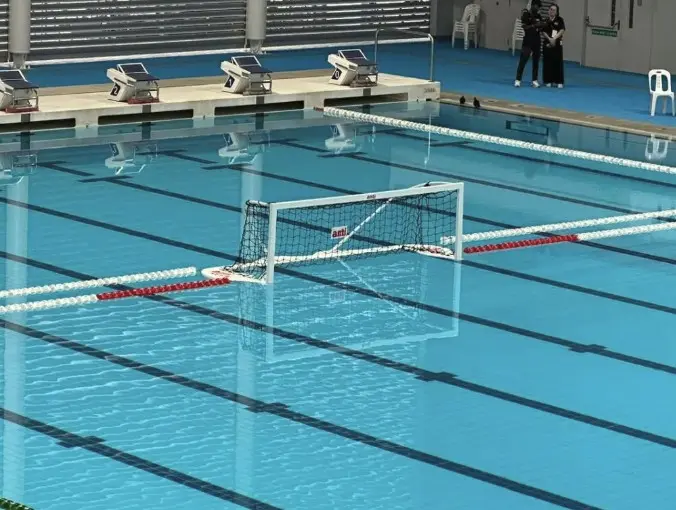
The water polo goal is one of the most important pieces of competition equipment. World Aquatics requires goals to have an internal width of 3.0 metres and a crossbar height of 0.9 metres above the water surface. Goals must be securely anchored and capable of withstanding repeated impacts during competition. Proper installation is essential for player safety and accurate officiating.
- Goal width: 3.00 m
- Crossbar height: 0.90 m
- White goalposts and crossbar
- Secure anchoring required
What are the required Water Polo Field Markings?
Field markings play a crucial role in helping referees, players and spectators understand the flow of the game. World Aquatics requires clearly visible markings for the goal line, goal area, six-metre line and halfway line. These markings are typically represented using coloured floats attached to the field boundary ropes.
- Goal line markings
- Goal area markings
- Six-metre line markings
- Halfway line markings
What do the different colours mean in Water Polo?
Colour-coded field markings provide visual references for players and officials throughout the match. White markers indicate the halfway line, yellow markers identify the six-metre line, and red markers indicate the goal area. This colour system helps referees make accurate decisions and allows players to quickly identify important areas of the field.
- White = halfway line
- Yellow = six-metre line
- Red = goal area
- Improves visibility and officiating
Where are the Team Benches and Re-entry Areas located?
The team benches and re-entry areas form an important part of the competition layout. They are positioned on the same side as the officials’ table and provide designated areas for coaches, substitutes and excluded players. Proper positioning ensures efficient game management and allows referees to monitor substitutions and player re-entry.
- Located beside the field of play
- Positioned near the officials’ table
- Includes player re-entry areas
- Supports competition operations
What Equipment is required for an Official Water Polo Competition?
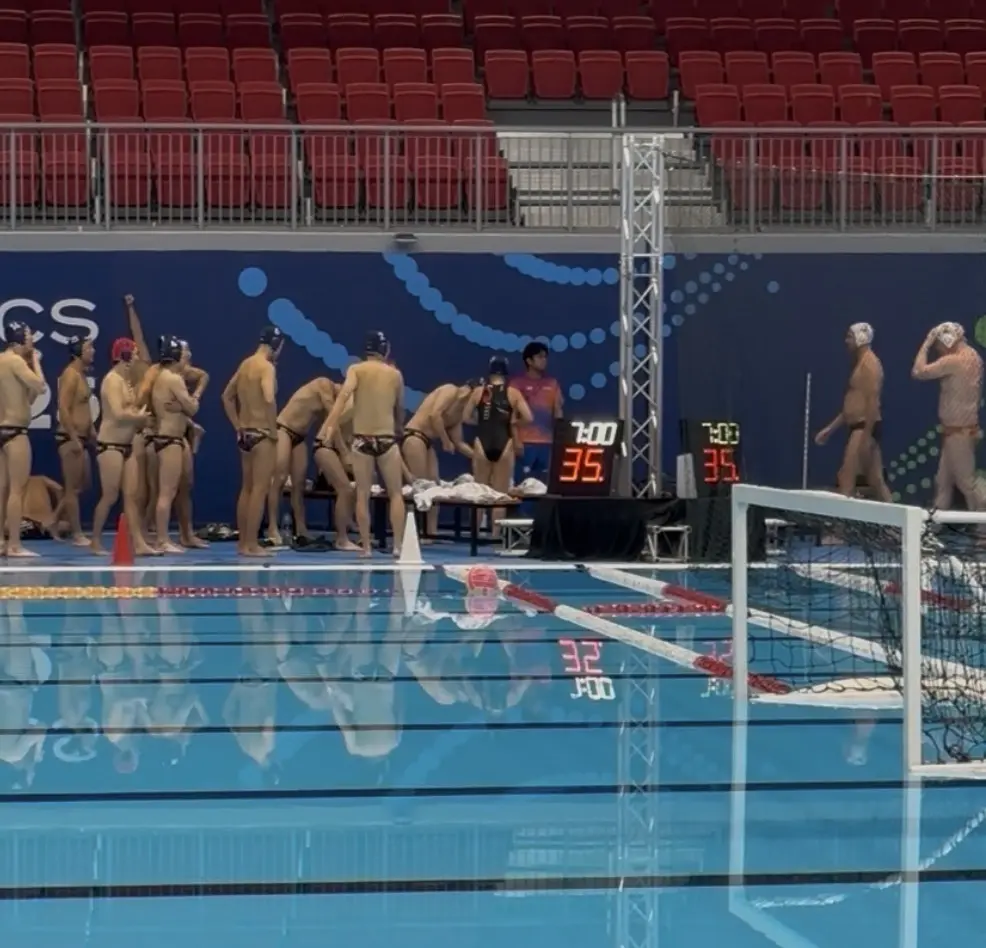
In addition to the field of play itself, a World Aquatics competition venue requires a range of specialised equipment. This includes competition goals, shot clocks, game clocks, scoreboards, timing systems and field marking ropes. High-level competitions may also incorporate video review systems and electronic officiating technology.
- Competition goals
- Shot clocks
- Electronic scoreboard
- Timing and officiating systems
Why are Shot Clocks important in Water Polo?
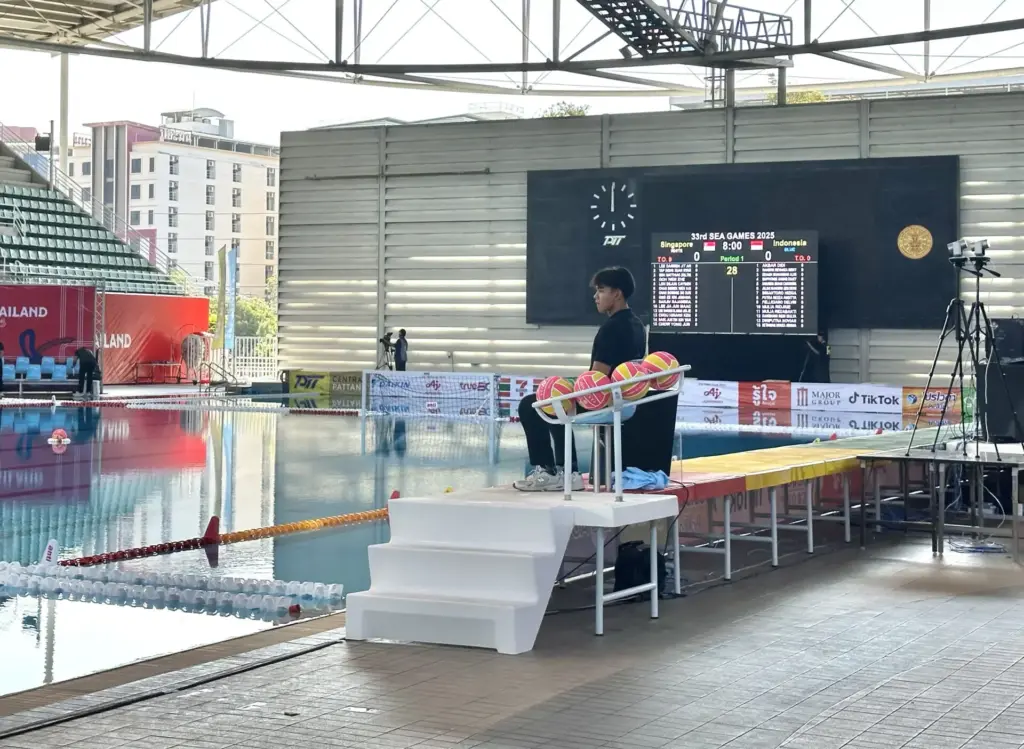
The shot clock controls the pace of the game by limiting the amount of time a team may possess the ball before attempting a shot. Modern water polo competitions rely on visible shot clocks positioned at both ends of the field. These systems are integrated with the game timing equipment and are essential for proper match administration.
- Controls game tempo
- Improves spectator experience
- Integrated with timing systems
- Mandatory for major competitions
What Water Temperature is required for Water Polo?
World Aquatics requires water polo competitions to be conducted in water temperatures that provide safe and comfortable conditions for athletes. Proper temperature control helps maintain player performance throughout the match and ensures consistency during competition.
- Comfortable competition environment
- Supports athlete performance
- Maintains consistent playing conditions
- Important for international events
What makes a Water Polo Pool World Aquatics Compliant?
A World Aquatics-compliant water polo venue is more than just a swimming pool with goals installed. Compliance requires adherence to field dimensions, water depth, goal specifications, field markings, timing systems and competition equipment standards. Facilities that meet these requirements are better positioned to host national, regional and international competitions.
- Correct field dimensions
- Compliant water depth
- Approved competition equipment
- Suitable for international competition hosting
Planning a World Aquatics Water Polo Facility
Designing a water polo venue requires careful consideration of athlete safety, competition requirements and long-term operational needs. By incorporating World Aquatics standards from the beginning of the project, facility owners can create venues capable of hosting everything from community programmes to elite international competitions. Working with experienced aquatic consultants and equipment specialists helps ensure compliance while maximising the value and versatility of the facility.
